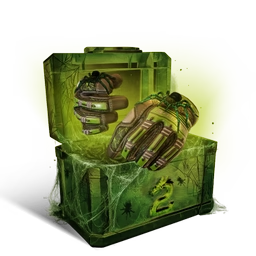
Level Up Your Luck: Exploring the Thrills of CS:GO Betting Online
The intersection of video games and wagering has created a massive digital economy, with Counter-Strike sitting right at the center. CS gambling sites have evolved from niche community projects into a multi-million-dollar industry. For enthusiasts looking to understand how these platforms operate, what games they offer, and how to stay safe, navigating this virtual landscape requires both knowledge and caution.
This comprehensive guide explores the mechanics of CS gambling sites, the types of games available, safety considerations, and what the future holds for this digital phenomenon.
What Are CS Gambling Sites?
CS gambling sites are third-party online platforms that allow users to wager virtual items—specifically Counter-Strike weapon skins, cases, and stickers—or real currency on various games of chance and skill.
Because Valve, the developer of Counter-Strike, introduced a robust economy driven by cosmetic weapon skins with real-world monetary value, an entire ecosystem grew around trading and wagering these digital assets. While some platforms operate strictly with cryptocurrency or fiat currency, the defining feature of the “CS gambling” niche is its deep integration with the Steam inventory system.
Types of Games Found on CS Gambling Platforms
Unlike traditional online casinos, CS gambling sites cater specifically to the gaming demographic by offering unique game modes tied to the aesthetics and culture of Counter-Strike.
Here are the most popular game types found across these platforms:
- Case Opening and Battles: Users simulate opening virtual cases. In “Case Battles,” multiple players open the same cases, and the player who drops the highest total value wins all the items.
- Crash: A multiplier starts at 1.00x and rapidly increases. Players must cash out before the multiplier randomly “crashes.” If they fail to cash out in time, they lose their wager.
- Roulette: A variation of traditional roulette, usually featuring red, black, and green (or rare multiplier) segments, often branded with CS-themed visuals.
- Coinflip: A classic 1v1 game where two players wager equal skin values. A digital coin is flipped, and the winner takes the entire pot (minus a small site fee).
- Jackpot: Multiple players pool their skins into a central pot. A winner is drawn via a lottery system, where the probability of winning is proportional to the value of the skins deposited.
- Esports Betting: Traditional sportsbook-style wagering on professional Counter-Strike matches (ESL, BLAST, Majors, etc.) using skins or cash.
Comparing Popular CS Gambling Game Modes
To help users understand the mechanics, risks, and pacing of these platforms, the table below breaks down the most common game modes.
| Game Mode | Player Interaction | Speed of Play | House Edge / Fairness | Risk Level |
|---|---|---|---|---|
| Crash | Single-player (timed) | Very Fast | Variable (Provably Fair) | High |
| Case Battles | Multiplayer (competitive) | Medium | Moderate to High | High |
| Coinflip | 1v1 (direct opponent) | Fast | Low to Moderate | Medium-High |
| Roulette | Single-player / Multiplayer | Fast | Fixed (House Edge) | Medium |
| Esports Betting | Passive (spectator) | Slow (match-dependent) | Variable (Odds-based) | Low-Medium |
Understanding Provably Fair Systems
One of the most important concepts in modern CS gambling is the Provably Fair algorithm. Because third-party sites are unregulated compared to traditional casinos, users need a way to verify that the outcomes of games are genuinely random and not rigged by the platform operators.
A Provably Fair system typically relies on three components:
- Server Seed: A randomly generated string created by the site, which is hashed and shown to the player before the bet is placed.
- Client Seed: A string provided by the player’s browser (or chosen by the player) that influences the outcome.
- Nonce: A number that increases with every bet placed.
After the round concludes, the server seed is revealed, allowing the player to independently verify that the game’s outcome was predetermined and mathematically fair. Always look for platforms that utilize a transparent Provably Fair system.
Safety, Security, and Best Practices
Participating in CS gambling carries inherent risks. Beyond the financial risk of losing funds, users must navigate cybersecurity threats, scams, and regulatory gray areas.
If users choose to engage with these platforms, adhering to strict safety protocols is essential:
- Beware of Phishing Scams: Never log into your Steam account through an unfamiliar link. Scammers often create exact replicas of popular gambling sites to steal login credentials and inventories.
- Enable Two-Factor Authentication: Ensure your Steam Guard Mobile Authenticator is active to protect your digital assets.
- Understand Steam Trade Restrictions: Valve implemented a 7-day trade hold on items traded through the Steam community market and peer-to-peer trades. This impacts how quickly skins can be deposited and withdrawn.
- Set a Budget: Treat gambling purely as a form of paid entertainment, never as a way to make money or recover financial losses.
- Check Jurisdiction Laws: Online gambling laws vary significantly by country and state. Ensure that participating in online wagering is legal in your region.
Frequently Asked Questions (FAQ)
1. Are CS gambling sites legal?
The legality of CS gambling sites depends heavily on your geographic location. Because many of these platforms operate offshore and exist in a regulatory gray area regarding virtual items, users should consult local laws regarding online gambling and digital assets.
2. Can I lose real money on CS gambling sites?
Yes. Whether you deposit fiat currency, cryptocurrency, or high-value weapon skins that can be sold for cash on third-party marketplaces, you are risking real monetary value when you play these games.
3. What does “Provably Fair” mean?
Provably fair is a cryptographic technology used by online gambling sites to allow players to independently verify that every game outcome is completely random and has not been manipulated by the house.
4. Why do some sites have a 7-day trade hold?
Valve enforces a 7-day trade restriction on all traded Counter-Strike skins to prevent fraud and unauthorized transfers. Consequently, many modern gambling sites use peer-to-peer (P2P) systems or crypto/fiat balances to bypass these delays.
5. Can Valve ban my account for gambling?
Valve’s Steam Subscriber Agreement prohibits commercial use of Steam accounts and certain automated trading activities. While Valve has historically targeted automated bot accounts associated with major gambling networks, individual users also risk penalties if their accounts are linked to suspicious trading behaviors.
CS gambling sites represent a unique fusion of gaming culture, digital economics, and chance. While the variety of game modes—from fast-paced crash games to tactical esports betting—can be entertaining, users must approach these platforms with a high degree of awareness. By prioritizing security, understanding provably fair mechanics, and maintaining strict financial boundaries, participants can navigate the virtual casino floor safely and responsibly.
Discover the latest CS2 Gambling Site reviews, promotions, and gameplay tips at csgamblingsite.com. Compare trusted platforms before you play.